Showing posts with label intuition. Show all posts

Sunday, September 05, 2010

How to get in touch with your Intuition

The most important decisions in life must be made with intuition. There will never be enough data, and they aren't linear.

I'm thinking of the first time I shopped for a house by myself. I made a list - don't we all? There were things on it like (1) best school district and (2) close to a convenience store (since I was a single Mom) and (3) Off 210 and (4) 3 bedrooms.

Well, the trouble is that I found 3 houses that fit all my specs. I stood there with the realtor, baffled, and she said, "Well I think you should get the one on Bluffridge. You got alpha waves in your eyes when you walked in."

Simply a way of saying that in THAT house I FELT the best. She got me in touch with my intuition, and it'smy favorite house of all the houses I've lived in.

HOW DO YOU GET IN TOUCH WITH YOUR INTUITION

There are lots of different ways people get messages from their intuition.

1. Through a body ailment, pain or illness. Intuition is symbolic. If someone's being a pain in the neck, you may get a pain in your neck just to get you to pay attention.

2. Humming a tune, out loud or in your head, with or without lyrics. You later realize the lyrics to the song had particular meaning to the situation.

3. Visual images. Many scientists have discovered answers by receiving visual images.

4. In dreams. We also get hypnagogic images and answers right before and after sleep, in twilight time.

5. Quotations or poems popping into your head that have meaning to the situation.

6. Precognition--premonitions about things that might happen in the future.

7. Deja-vu experiences. Time and space get mixed up but the message is there.

8. Bodily sensations.

9. Breaking things, hurting yourself or having accidents.

10. Talking with someone who is perceptive and knows you well - like your coach. Significant others, etc. but coaches have those qualities as well as the ability to be objective.

Once you're attuned to all the ways your intuition can talk to you, you'll be better able to access this valuable emotional intelligence competency.

-----------------------------------------

(c)Susan Dunn, MA, Emotional Intelligence Coach, http://www.susandunn.cc. Offering coaching, Internet courses, teleclasses and ebooks around Emotional Intelligence. I train and certify EQ coaches. Email for info on this affordable, fast, flexible, no-residency program. Mailto:sdunn@susandunn.cc. For FREE ezine, email me and put \"ezine\" for subject line.


Add to My Yahoo!

Friday, August 21, 2009

Gut-feeling: Don't leave home without it

HEAD OF HERCULES (CC Flickr User giopuo.)

Intuition or Gut-feeling (an EQ competency) - don't leave on your quest without it. (Take the EQ course, or EQ coaching to learn more).

Do you know the Myth of Jason and the Golden Fleece?

When Jason outfitted the Argo (his ship) to go off on his heroic journey for the Golden Fleece, he hand-picked the brightest and the best. This included "the best seer, Mposos, (before whose amazing skill Agamemnon's seer, Calchas, will later admit defeat and die or be killed after laughing at Hercules."

Does that surprise you? Of course he had fighters too, and those with physical skills. But Agamemnon had "his" seer as well. Every leader did (and still needs to). Myths are symbolic, of course, and that's why they convey so much wisdom. A seer is someone who can predict the future, and as you know, the data always runs out, so we need our intuition or gut feeling, if you will, to chart our course. Think of a successful stock broker. Well, first of all, my stock broker got me out and into a safe haven just before this latest decline. How did he know?? It wasn't just by looking at the data, or all the stock brokers would have gotten all their clients out in time (and then the economic scene would be even worse, but let that pass for now). Where does the gut-feeling come in? Whatever field you're in, you study the data, and then at some point - with all important decisions - you have to take what might elsewhere be called "a leap of faith."

We all have intuition - it's a basic survival skill. It's how you know to get away from things that are harmful. Intuition, or gut-feeling, can be developed, but for most of us, it's a matter of learning how to integrate intuition with rational thinking; learning how your intuition speaks to you ("I had that sinking feeling," "I felt sick after the interview," "I knew to get away from him because he made the hair on the back of my neck stand up."

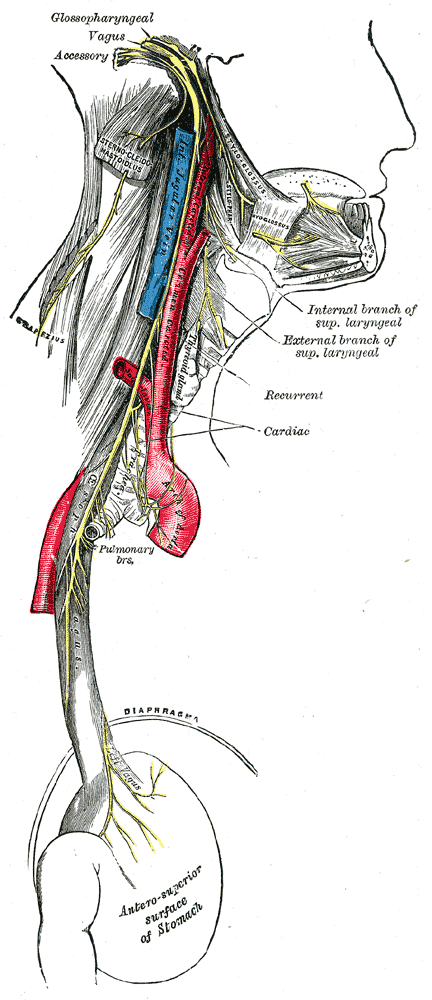
Intuition is called gut-feeling, BTW, because of the vagus nerve. Read more about this in the Intuition ebook, Intuition course, or EQ Course.

Back to Jason and the Golden Fleece. Jason hand-picked men with all the skills required. In addition to the best seer available, he also included a tamer of rocks and beasts, a psychopomp and giant-killer, a horse and boxing-expert pair known as the Dioscuri, and so forth.

From the article:

*Timothy Gantz treats the Argonaut Mopsus as the one whose prowess leads to Calchas' death ... Calchas knew he would die when he met a superior in the art of prophecy. Mopsus was this seer. The questions posed (as in Apollodorus VI) were either the number of figs on a fig tree or the numbers of piglets that would be in a sow's litter...

Ever wonder why there is ALWAYS a RIDDLE when a hero sets out on their journey? They are talking about intuition, or gut-feeling. It is always a "trick question." Think about it.

More on this later.

Meantime, increase your intuition and gut-feeling with The EQ Course, and EQ coaching. Don't leave home without it!

To learn more about the my Magic of Myths Cour. It's on the Internet. $29.99. Email sdunn@susandunn.cc for information and to register.

Add to My Yahoo!

Tuesday, December 23, 2008

How Come Madoff Slipped through the Cracks?


The topic today. Emotionally Intelligent regulation, inspection and reporting - a necessity for almost any organization.

Overheard on the streets: "All cultures steal."

A key phrase that comes to mind "Do it smarter, not harder."

There was a song back in the 60s by Al Wilson called "The Snake." The lyrics: "Oh shut up, silly woman," said the reptile with a grin, "You knew damn well I was a snake before you took me in."

Snakes have fangs. Rattles. No legs. Do you know a snake when you see one?

First: The wisdom of the words of Harvey Pitt, former chairmen of the SEC on regulatory changes. See the video clip: Harvey Pitt, CEO of Kalaroma Partners, former chairman of the SEC speaks to Martin Soong and Sri Jegarahaj on the Madoff scandal.

A bit of history if you live under a rock and have not heard about this fiasco. Allegedy $22 billion alone was discovered in October when the SEC finally moved in on Madoff's Ponzi scheme and it is suspected to get worse. Update Dec. 25 - Now thought to be $50 billion.

Madoff is currently on bail of $10 million.

The interview with Harvey Pitt is entitled: SEC is Badly in Need of an Overhaul: Analyst . "Don't mean to get your back up from the get-go," begins the interviewer:

The SEC's inspection and examination program is badly in need of an overhaul,
said Harvey Pitt, former chairman of the SEC, after the SEC failed to uncover the Madoff scandal even when red flags were raised. In the videod interview, Pitt tells CNBC's Martin Soong & Sri Jegarajah what needs to change -- not more regulation, not less regulation, but smarter regulation.

Complaints were launched re: Madoff years ago. In 2005, it was found Madoff had lied to or mislead the SEC and yet the SEC took no action (William Donaldson was chairman of the SEC at that time). Credible complaints must be investigated, notes Pitt.
_______________________________________________________

Lets disconnect for a moment from a federal regulatory agency and a $50 billion fraud, to take a look at your shop. Applications for daily life?

Complaints abound, I'm sure. How do you recognize a "credible" complaint? Well, it has to do with gut feeling. About the person making the report, to begin with; and about the person being complained about, to end with.

It's a twinge when you see someone, a sense that something's wrong, smelling a rat, knowing at the gut level, as Hamlet did, that "something is rotten in the State of Denmark," and likewise, a sense that the person "complaining" is credible. Because you have a sense of trusting them - you "feel like" you can trust them. Because you've had a lot of experience with people. A SENSE ... we keep coming up with that. It's our senses (sight, smell, touch, and internal feelings) that give us the most crucial information. When you say "I KNEW he wouldn't work out," and then go back and process how you knew, and what you did not pay attention. "Against my better judgement..." Some define intuition as "knowing without knowing how you know."

More businesses and firms are dealing with theft, deception and intentional fraud these days. I spoke with a lawyer the other day whose new secretary had forged firm checks during her first week (and is now incarcerated).

Hard times increase both the possibility and the opportunity.

It helps to have keen intuition ("gut feeling"). To increase yours, to recognize its signals, and to learn to trust it. Get in touch with your feelings ... your GUT feelings ... the knot in the stomach, the sense that something's not right, the twinge at the sight of someone, the hair standing up on the back of your head, knowing whose 'got your back' and who doesn't, who lies and who doesn't, the name of that tune you keep humming when you see her ...

Lets face it, even the TSA in the DFW airport has moved to give screeners more latitude in using their instincts. Why? You tell me!

It's not always on paper. It's within us, or within those who have well-developed 'feelers.'

The Fort Worth newspaper said that the TSA was planning to "get away from the by-the-numbers mentality used to create the TSA." They plan to vet passengers' reactions and intent, not just search for banned items. Hawley, administrator of the TSA was quoted as telling screeners, "We have seen more images, more people, more shoes than anyhody ... you know what normal looks like."

Do YOU know what "normal" looks like? Do you know what a snake looks like??

Like the other emotional intelligence competencies, intuition (gut feeling) can be developed. And why would you want to? In a teleclass I taught on intuition a couple of years ago, I asked the class how you know it's intuition. Someone replied, "It's when you are absolutely certain."

Last example, a coach I trained in the UK who uses emotional intelligence training for people in high-danger jobs like oil rigs and nuclear plants. She teaches them about their intuition and how and when to trust it, their gut feeling*. Trains them to get back in touch with those "feelers" that tell us "something just isn't right" or "something has changed." In a nuclear plant you MUST notice when something is different ... a strange hiss, a silence where there should be noise, a sneaky look ...

*gut feeling probably comes from the vagus nerve. According to wikipedia, the vagus nerve is:

... the only nerve that starts in the brainstem (within the medulla oblongata) and extends, through the jugular foramen, down below the head, to the neck, chest and abdomen, where it contributes to the innervation of the viscera.
You know how when something really hits you, you say "I had a visceral response"? The vagus nerve goes from the brain stem down into the intestines. Why an anti-depressant might make you constipated. Why when you're afraid, you might sweat, throw up or have diarrhea or be unable to breathe well. Why when you mistrust someone you might get 'nervous' - tight stomach, twitching leg, urge to run away.

Lastly, your "shop" may be your family. Your kids tattle on each other all the time, right? How do you know what to believe? My mom used to say she had eyes in the back of her head.

There are signs. Pay attention to them. Learn how YOUR intuition, or gut feeling, speaks to you.

Add to My Yahoo!

Sunday, March 23, 2008

TSA and Instincts

Oh, the uses of "intuition", an emotional intelligence competency.

From the Fort Worth newspaper the other day - the TSA is planning to five screeners "more latitude to use their instincts and experience to ID terrorists, and get away from the by-the-numbers mentality used to create the TSA."

More from the article:

  • They want to concentrate on looking for passengers who act out of the ordinary
  • Said Hawley, administrator of the TSA: "We have seen more images, more people, more shoes than anybody." He told screeners, "You know what normal looks like."
  • They plan to vet passengers' reactions and intent, not just search for banned items
Well, he tells one way "intuition" is developed -- by lots of experience. There are ways you use this in your own life - how you know the kids are getting into something they shouldn't when they're in the other room ... how you know someone's mad at you by changes in their routines (not calling you for a week) ... which line at the bank drive-in will move fastest (I always get behind someone who's brake light is on - they have their foot on the pedal! ... which fruit is ripe and which one isn't.

Intuition, aka gut instinct and gut feeling, is an important emotional intelligence, lifeskill as you can see.

There's always a flip side. If you want to know how to behave more "normal" at the airport, so you don't get singled out, email me for my new ebook on nonverbal behavior. No doubt they will single out people who look and act nervous, and you can learn more about that. Performers, speakers, teachers all practice looking "at ease".


Add to My Yahoo!

Thursday, July 19, 2007

Intuition - How to get it, how to use it, why to want it


Add to My Yahoo!


WHAT IS INTUITION - Get the book, Intuition and learn how to develop this important tool
When you trust yourself, you can trust your intuition.
Definition:
1. quick and ready insight
2. immediate apprehension or cognition; knowledge or conviction gained by intuition; the power or faculty of attaining to direct knowledge or cognition without evident rational thought and inference
Also known as "gut feeling" or "gut instinct" it is a way of knowing without knowing how you know. It's knowledge "without evident rational thought." It does not preclude reason, but rather work with it.
Corporations are even hiring Intuitionists.

Call it what you will -- it's an Emotional Intelligence competency -- a powerful decision-making, problem-solving, insight-giving tool that helps us get along better in the world.
It is faster and more sure than reason. You must learn to sepate it out from wishful thinking and paranoia, however. As I say in my ebook, if you can't manage your 'fear' and 'desire,' you can't rely on your intuition, because it will be faulty. How do you tell? Managing the emotions and self-awareness are the beginning. Then we tell you what steps to follow and give many exercises, proven to improve your intuition. When you can trust yourself, you can trust your intuition.

Saturday, January 13, 2007

Is Blink about Intuition?


BigNosedUglyGuy (BNUG) (I don't know who he is) blogs about Gladwell, Enron, Blink, and rapid cognition ... which may or may not be "intuition." BNUG is confused about just what intuition is. He refers to Thomas Gladwell's article, "Open Secrets: Enron, Intelligence and the Perils of too much Information in the New Yorker.
Gladwell wrote Blink: The Power of Thinking without Thinking, which has been particularly popular with analytical, rational types; people who must make something difficult. Sort of the Protestan ethic of thinking -- if you don't have to sweat over a spreadsheet for 3 hours, you don't have the answer type of thing. High IQ and suspicious of "emotion" for some reason.
Well, intuition has gotten "bad press" for a long time' for decades it was married to the word "female." Women are better at it because their brains conduct emotion better, and there's quicker and better communication between both hemispheres of the neocortex. (See Essential Difference; Truth about Male & Female Brain) Men's are better at other things ... besides if you're unhappy with the state of your emotional intelligence (which includes intuition) find out where (take the EQ Map) and then come learn more. EQ, unlike IQ, can be improved upon.
Gladwell talks about "rapid cognition", the kind of thinking that happens in the blink of an eye. It is fast, immediate, and spot-on. Therefore heavy-thinkers who rely excessively on reason and logic are annoyed by it, as well as mystified. (And Gladwell gives some fascinating examples!) It happens to be essential for making good decisions, of the most important type (like whom to trust, and whom to marry and 'when to hold 'em and when to fold 'em' and whether that Van Gogh is a fake or not) . It's why we find 150-IQ geniuses whose private lives are in shambles. But "blink" puts it up in the eyes and smacks of 'neocortex" (cognition, doh) while it's really in the gut ... read about the vagus nerve. After all, our heads can lie to us, our gut cannot. Why else do you get a headache every time you have to deal with that ignoramus down in the IT department?
Our blogger says "When you meet someone for the first time, or walk into a house you are thinking of buying, or read the first few sentences of a book, your mind takes about two seconds to jump to a series of conclusions."
Actually what happens is you get a feeling that cirumvents the deceptive neocortex completely, which is why it's so spot-on!

It's a gut feeling and we use sensory words to describe it - it stinks, something was fishy, she's like a warm bath, I walked in there and it felt like 'home,' my hair stood on end, he made me sick to my stomach, she gave me butterflies in my stomach ... that kind of thing. It's when a man says, "I knew the minute I met her that I would marry her."
What's rational about that?
BNUG says "You could also say that it’s a book about intuition, except that I don’t like that word. In fact it never appears in 'Blink.' (Oh thank heavens?) (and isn't that like saying you don't like the word "gravity"?)
Well, we need all the information we can get about how the brain works, and how to make the most important decisions. I, like BNUG, am fascinated with the subject too, because I teach it.
Everyone has intuition; it can always be developed. It is essential to our safety. It is also not dependent on "cognition" or the neocortex. Like the dog sensing the earthquake coming, those sensient people who know their "gut feelings" are the most likely to sense something's wrong in a nuclear plant (a funny sound, a change in temperature .. yes, it is about change). They also know how to pick a winner - at the racetrack or in the stock market. If rational study and analysis were the answer, we'd all be rich in the stock market which is, after all, the most emotional thing on earth. (Though men don't like to admit it.)
If you cannot get in touch with (note the wording) gut feelings, you'll be standing there reading the chart that says everything's okay when the nuclear reactor blows. Horses in a burning stable have more "sense" than that!
There are different definitions of intuition. (See my ebook on "Intuition") Different levels. One is the sensory level. Think of how a dog stays live - they share the limbic brain with us humans, but they have no neocortex and they cannot think. There are no "rapid cognitions." If your dog doesn't "like" someone, it is (1) not rational and (2) something you'd best pay attention to. Yes? Same with kids. The neocortex, the thinking brain, isn't fully developed for years ... and kids have to go on the instincts they were born with. The ones that keep us alive.
A definition the more intellectual types prefer is that is comes from experience. Yes, I've had people ask me on coaching calls, "How did you know that?" like I was pulling rabbits out of a hat? "How did you know I was the first-born?" or "How did you know my mother was mentally unstable/alcoholic/on drugs?" or "How do you know my husband is critical?"
From years of experience. Things kick in for me. I've heard how the pieces go together, over and over, and while each person is unique, certain patterns present themselves repeatedly, and certain causes tend to bring on certain effects. After a while you can read backward from the effect, which is a sort of intuition. My job is to untangle mis-wired connections and reprogram them, so I know a lot about it. And I coach over the phone. I don't even need to see the person. Years and years of experience with people, clinical data, in the trenches sort of thing. (No I can't read someone's mind ... in fact you're in big trouble if you think you can, but I can sense things.)
That's why I wouldn't go to a surgeon, or coach, or stock broker who wasn't over the age of 40. Book learning can't get to the core of things. On the most important things, the data always runs out. You have to have emotional intelligence to take you over those leaps. When the coin's in the air spinning, you can't take out a probability chart. It would say 50-50, yes?
How do you know when to trust your intuition? How do you know if those snap judgments are right? Well, your intuition will tell you ... and if that isn't a Catch-22. (Work with an EQ coach and learn about it ... it can be learned.)
BNUG writes, "I'm tryng to understand those two seconds. What is going on inside our heads when we engage in rapid cognition? When are snap judgments good and when are they not?" And THATt is the crucial thing to know. "Alpha males" get into a lot of trouble because they make snap intellectual judgments about people. That works with data; it does not work with people. You must judge people ultimately, in the ways that matter, from a "gut feeling." Alpha males - and most CEOs and professionals are that - are notorious for (1) not believing anyone who doesn't have a Ph.D. in the field, and thereby missing the clear common sense the secretary knows, and everyone else knows...except for the CEO; and (2) allowing a person one mistake, and that's it. They can never recover, redeem, grow or learn. What a waste of people.
Those sorts of "snap judgments" are really harmful.
The "snap judgements" that work? She blew it on her first assignment, but I "know" her (this is intuition). And then you roll it out (smart people learn how to rationalize intuition for those who don't "believe" in it) - I trust her (she comes to work on time, she doesn't lie when she makes a mistake, she bakes us cookies). She is eager to learn (she's always reading something, she enters conversations outside her 'area' and wants to learn). She can learn (I've never seen her make the same mistake twice).
There are all sorts of signals "below the surface" to the purely neocortex-type that give a plethora of information you really need to know, to tune in to, to make things work. You have to be able to 'read between the lines,' to 'see the handwriting on the wall,' to 'call a spade a spade.'
Our blogger asks, "What kinds of things can we do to make our powers of rapid cognition better?” Answer: EQ coaching. It can be learned. It can be taught.
"How do you know when you have good intuition?" BNUG queries. There's really no such thing as "bad" intuition ... because that isn't intuition at all, it's something else. Fantasy, wishful thinking, etc.