Showing posts with label SEC. Show all posts

Friday, May 22, 2009

Why Do We Wait?

AS THE SUN SETS ON ANOTHER CHAPTER OF LIFE

I am moving from Dallas to the D. C. area (Falls Church, Virginia). I lived in Dallas only 18 months. I had moved from San Antonio.

Now, demographically, San Antonio and Dallas might as well be on different planets. As I continually told people when I was in Europe, who wanted to know how things were done in "America," or how "Americans" folded their napkins -- there is no such thing as "America," in the sense that they mean. The folding of the napkin, even the existence of the napkin at all, varies widely from Le Batre, Louisiana to Billings, Montana, to Wesport, Connecticut, to Portland, Oregon.

That having been said, generally speaking the farther south you go, and the more toward an ocean, the warmer and gentler things become. Dallas is land-locked smack in the middle of the huge state of Texas. It is "Dutch" - like New York City - established with commerce, business, as the primary focus.

So, back to my story. I've lived here 18 months and moved around. Went to the same stores, restaurants, PO, exercise club. Was greeted peremptorily - everyone greets the customer these days, don't they? I felt not welcome, but not UN-welcome either. Kind of ghost-like. Same with my apartment. Quiet, clean, not much flavor to it, but an easy place to live, an easy place to function from, i.e., "doin' bidness." People looked up and nodded, sometimes said "hello" or "howdy."

Now I am leaving, and there has been occasion to tell the people at the Tetco on the corner, and Mezza Luna, the great Italian restaurant behind the UPS, and my apt. manager, and all of a sudden I have been "noticed." Many have seemed upset and sad I was leaving. I mean, genuinely. They say how much they will miss me. Someone asked my name - for the first time. Some hope that I will return. Nameless for months, I suddenly have a name.

ISo what's my point? I am doing a booklet for a family reunion we are having in D.C., centered around the SEC Historical Society's Anniversary Dinner, because my father, Ray Garrett, Jr. was a former chairman of the SEC. We are privately going to honor him at this public celebration. Within his papers, while doing research for this booklet, I found the following.

In 1971, his father, Ray Garrett, was presented with a major award from the American Bar Association. Ray Garrett Sr. had chaired the committee that revised the Model Business Corporations Act. In the trade it would be said, "he wrote it." This work was finished in the mid- 60s, and Ray, Sr. died in 1969. Revising the Model Corporation Act will always be considered Ray Garrett Sr.'s greatest contribution to the field, and also a great contribution to the field.

Ray Jr. went to receive the posthumous award to his father. A newspaper reporter interviewed him.

Reporter: What do you think about your father getting that award?
Ray Garrett, Jr.: It was nice. It would have been nicer if it had happened when he was alive.

Res ipse loquitur.


Add to My Yahoo!

Thursday, May 21, 2009

Memorial Day Tribute

RAY GARRETT, JR. WITH HIS GRANDSON MARSHALL DUNN

Artilleryman digging in their howitzer in Germany in the spring of 1945.

My father, RAY GARRETT, JR. served in the 264th Field Artillery batallion, First Army.

 Helped to liberate Paris
 Was the first to breach the Siegfried Line
 Captured the city of Aachen
 Hodge's army (Dad's 264th)bore the full weight of the German counteroffensive through the Ardennes (December 1944)
 Held the northern portion of the American lines in the ensuing Battle of the Bulge.
 Captured the bridge over the Rhine River at Remagen in March 1945
 Was the first Allied Artillery to cross the Rhine into Germany
 Landed at Omaha Beach 30 days after D-Day
 Eventually got to Munich in Patton's Army

Dad entered at the age of 24 as a Lieutenant. Was promoted to Captain and got the Bronze Star.

We will honor my father at our family table at the SEC Historical Society dinner in June in Washington, D. C. Ray Garrett, Jr. was the 19th chairman of the Securities and Exchange Commission.

Add to My Yahoo!

Sunday, May 17, 2009

Speech by Ray Garrett Jr., former chairman of the SEC


RAY GARRETT, JR. (Center), FORMER CHAIRMAN OF THE SEC

The 75th anniversary of the Securities and Exchange Commission (SEC) is approaching and the SEC Historical Society is giving a dinner in June. Our family has purchased a table at the dinner in June and we will have our own personal celebration of the chairmanship of Ray Garrett, Jr., my father, the 40th chairman of the SEC.

In light of the Madoff scandal and other current happenings, here is an excerpt of a speech by Ray Garrett, Jr., then chairman of the SEC, given to THE
SAN DIEGO MORTGAGE BANKERS ASSOCIATION, July 2, 1974 in San Diego, California.

Some problems seem always to be with us. One of them is the matter of enforcement of our laws and the suppression of fraud. Businessmen sometimes complain that SEC Commissioners are always talking about fraud, creating the public impression that American business generally is run by a bunch of crooks. Obviously, that is not a correct impression. If it were - - if crooks really dominated our business community - - the task of the Commission would be utterly hopeless. The only reason our system works at all is because voluntary compliance is the norm and non-compliance the aberration.

Furthermore, all violations of the securities laws cannot fairly be characterized as fraud. Perhaps we use the word too loosely.

Nevertheless, there are some crooks in business and some fraud continues to be committed, and in this area, as in others, the policeman’s lot is not a happy one. Quite naturally the instances of fraud, when exposed, attract the most attention. In a sense I wish some of them would attract more attention. Some types of fraud depend upon credulous investors who really should know better.

The two most recent cases to attract nation-wide attention - - Home-Stake Oil and the industrial wine fraud - - were both variations on the classical Ponzi scheme. The first investors were paid off out of the proceeds of sales to later investors and nothing, or very little, was ever invested in the supposed business.

The facts in Home-Stake go back several years, and the case is receiving current attention only because the Chapter X trustee recently submitted a list of the names and amounts of the investors. It is a most illustrious list of leaders of industry and finance. At least those who have lost money in Home-Stake have the dubious satisfaction of being in elegant company.

The wine fraud centered in the Washington, D. C., area and it included among its victims some local bank presidents. The scheme was to corner the market in Portugal for cheap “industrial” wine - - a non-existent item in the wine industry - - and import it for sale to U.S. canners of salad dressings, etc. Investors were offered something like double their money in a year. You would like to think that a promoter offering a chance to double your money in a year in the Portuguese industrial wine market simply would be laughed at. But, of course, many people did double their money - - as long as the promoter was able to keep selling enough notes to produce funds to pay off the earlier ones.


I like reading the reminder that fraud is the exception to the rule ... and also the caveat emptor -- the "buyer beware." It is so hard to remember that - in business, in romance, in any aspect of life -- if it seems too good to be true, IT IS.

Add to My Yahoo!

Saturday, February 07, 2009

Markopolos Testifies about Madoff Ponzi Scheme

The moving finger ... watch how Harry Markopolos tracks his written testimony to make sure it is correct. The same focus he used in tracking Bernard Madoff's $50 billion Ponzi Scheme.

See, too, the Look of Shame. Compare the look on Markopolos' face it to our earlier blog on ...


THE LOOK OF SHAME


"I gift wrapped and delivered the largest Ponzi scheme in history to the SEC..."
Notice how this Jesuit-trained accountant begins by expressing his sympathy to the many people who were bilked by Madoff.


Harry Markopolos, an independent financial fraud investigator for institutional investors and others seeking forensic accounting expertise, as well as a Chartered Financial Analyst and Certified Fraud Examiner, testifies.
His role in the Madoff saga began in 2000, when the hedge fund he was working at asked him to figure out how to match the fantastically consistent returns produced by Madoff in options trading. Markopolos studied the markets and deduced it couldn’t be done: Madoff had to be cheating — either by front-running, which would’ve involved trading on advance information about customer orders from his market-making firm, or by the good ol' doomed-to-fail Ponzi method. Before long, the world-weary numbers cruncher settled on the latter and wrote a series of whistleblowing memos to the Securities and Exchange Commission. Memos that they, as we're now painfully aware, dismissed.
Many are trying to explain why him ... and to claim his as one of their own.

COMMENTS:
Bravo, Harry! That sharp mind of Greek ancestry was doing what the Greeks do best, think, analyze, and discover! Yes, President Obama should have you in his administration overseeing the stimulus and IRS. I have a strong feeling you've always paid your taxes, and on time!A fellow Greek-American from Boston!

He's a Libra...balancing the scales of justice.

His fine Jesuit education, the finest in the land. They teach education for a purpose, for doing good. Detail and thorough study.

Tuesday, December 23, 2008

How Come Madoff Slipped through the Cracks?


The topic today. Emotionally Intelligent regulation, inspection and reporting - a necessity for almost any organization.

Overheard on the streets: "All cultures steal."

A key phrase that comes to mind "Do it smarter, not harder."

There was a song back in the 60s by Al Wilson called "The Snake." The lyrics: "Oh shut up, silly woman," said the reptile with a grin, "You knew damn well I was a snake before you took me in."

Snakes have fangs. Rattles. No legs. Do you know a snake when you see one?

First: The wisdom of the words of Harvey Pitt, former chairmen of the SEC on regulatory changes. See the video clip: Harvey Pitt, CEO of Kalaroma Partners, former chairman of the SEC speaks to Martin Soong and Sri Jegarahaj on the Madoff scandal.

A bit of history if you live under a rock and have not heard about this fiasco. Allegedy $22 billion alone was discovered in October when the SEC finally moved in on Madoff's Ponzi scheme and it is suspected to get worse. Update Dec. 25 - Now thought to be $50 billion.

Madoff is currently on bail of $10 million.

The interview with Harvey Pitt is entitled: SEC is Badly in Need of an Overhaul: Analyst . "Don't mean to get your back up from the get-go," begins the interviewer:

The SEC's inspection and examination program is badly in need of an overhaul,
said Harvey Pitt, former chairman of the SEC, after the SEC failed to uncover the Madoff scandal even when red flags were raised. In the videod interview, Pitt tells CNBC's Martin Soong & Sri Jegarajah what needs to change -- not more regulation, not less regulation, but smarter regulation.

Complaints were launched re: Madoff years ago. In 2005, it was found Madoff had lied to or mislead the SEC and yet the SEC took no action (William Donaldson was chairman of the SEC at that time). Credible complaints must be investigated, notes Pitt.
_______________________________________________________

Lets disconnect for a moment from a federal regulatory agency and a $50 billion fraud, to take a look at your shop. Applications for daily life?

Complaints abound, I'm sure. How do you recognize a "credible" complaint? Well, it has to do with gut feeling. About the person making the report, to begin with; and about the person being complained about, to end with.

It's a twinge when you see someone, a sense that something's wrong, smelling a rat, knowing at the gut level, as Hamlet did, that "something is rotten in the State of Denmark," and likewise, a sense that the person "complaining" is credible. Because you have a sense of trusting them - you "feel like" you can trust them. Because you've had a lot of experience with people. A SENSE ... we keep coming up with that. It's our senses (sight, smell, touch, and internal feelings) that give us the most crucial information. When you say "I KNEW he wouldn't work out," and then go back and process how you knew, and what you did not pay attention. "Against my better judgement..." Some define intuition as "knowing without knowing how you know."

More businesses and firms are dealing with theft, deception and intentional fraud these days. I spoke with a lawyer the other day whose new secretary had forged firm checks during her first week (and is now incarcerated).

Hard times increase both the possibility and the opportunity.

It helps to have keen intuition ("gut feeling"). To increase yours, to recognize its signals, and to learn to trust it. Get in touch with your feelings ... your GUT feelings ... the knot in the stomach, the sense that something's not right, the twinge at the sight of someone, the hair standing up on the back of your head, knowing whose 'got your back' and who doesn't, who lies and who doesn't, the name of that tune you keep humming when you see her ...

Lets face it, even the TSA in the DFW airport has moved to give screeners more latitude in using their instincts. Why? You tell me!

It's not always on paper. It's within us, or within those who have well-developed 'feelers.'

The Fort Worth newspaper said that the TSA was planning to "get away from the by-the-numbers mentality used to create the TSA." They plan to vet passengers' reactions and intent, not just search for banned items. Hawley, administrator of the TSA was quoted as telling screeners, "We have seen more images, more people, more shoes than anyhody ... you know what normal looks like."

Do YOU know what "normal" looks like? Do you know what a snake looks like??

Like the other emotional intelligence competencies, intuition (gut feeling) can be developed. And why would you want to? In a teleclass I taught on intuition a couple of years ago, I asked the class how you know it's intuition. Someone replied, "It's when you are absolutely certain."

Last example, a coach I trained in the UK who uses emotional intelligence training for people in high-danger jobs like oil rigs and nuclear plants. She teaches them about their intuition and how and when to trust it, their gut feeling*. Trains them to get back in touch with those "feelers" that tell us "something just isn't right" or "something has changed." In a nuclear plant you MUST notice when something is different ... a strange hiss, a silence where there should be noise, a sneaky look ...

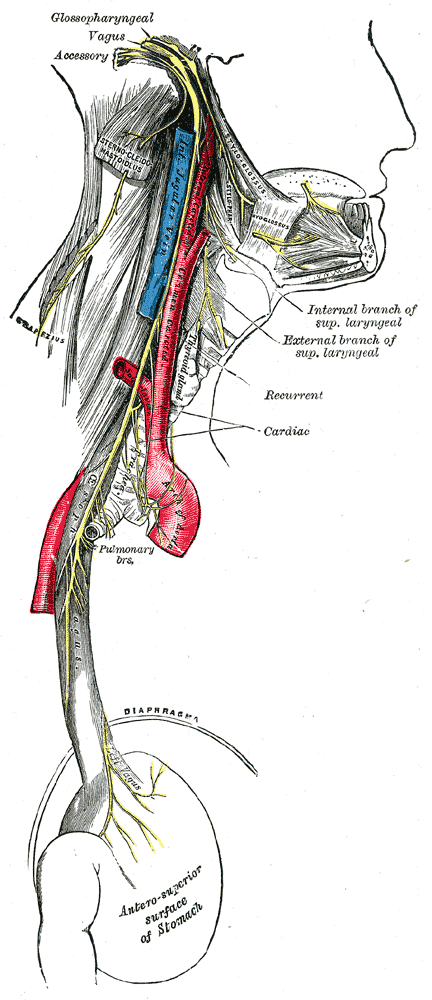
*gut feeling probably comes from the vagus nerve. According to wikipedia, the vagus nerve is:

... the only nerve that starts in the brainstem (within the medulla oblongata) and extends, through the jugular foramen, down below the head, to the neck, chest and abdomen, where it contributes to the innervation of the viscera.
You know how when something really hits you, you say "I had a visceral response"? The vagus nerve goes from the brain stem down into the intestines. Why an anti-depressant might make you constipated. Why when you're afraid, you might sweat, throw up or have diarrhea or be unable to breathe well. Why when you mistrust someone you might get 'nervous' - tight stomach, twitching leg, urge to run away.

Lastly, your "shop" may be your family. Your kids tattle on each other all the time, right? How do you know what to believe? My mom used to say she had eyes in the back of her head.

There are signs. Pay attention to them. Learn how YOUR intuition, or gut feeling, speaks to you.

Add to My Yahoo!

Tuesday, August 12, 2008

Ray Garrett - his contribution as chairman of the SEC


I traded some stock today at Charles Schwab and remembered that a low-cost provider that allows 'the little guy' to trade stocks as easily as we have all become accustomed to doing was only made possible by the efforts of Ray Garrett, former chairman of the SEC. His birthday was August 11.
[the article is entitled "the man under whom it will all shake down."]

Interview with Roderick Hills, 12/2/02: "The White House deregulated commission rates, and while Ray Garrett at the Commission deserves all the credit for that, the fact is that President Ford and Alan Greenspan were strong supporters of that ..."
We will be honoring Ray Garrett at The Securities and Exchange Commission Historical Society's 75th Anniversary Celebration Dinner for the SEC Commission and staff, government officials, and industry representatives on Thursday, June 25, 2009.
Ray Garrett, Jr. passed on in February 1980. He emceed a previous anniversary dinner and wouldn’t have missed this one for all the tea in China -- nor the personal archives and roundtables that the Historical Society has promoted since its inception. He loved the SEC, the law, his family, and his colleagues, whose names were legion.


Of Ray Garrett, Jr.’s Chairmanship, Commissioner Al Sommer later remarked:

“Certainly it is not an exaggeration to say that Ray was one of the most dearly beloved people ever to serve on the commission. You could walk the halls day after day and never hear a word of criticism of him, professionally or personally; never hear his integrity, or even his judgment, questioned; never
hear his leadership criticized.”
— A. A. Sommer, Jr.


At this time we are beginning to approach all of Ray’s friends and colleagues to give them an opportunity to participate in hosting or sponsoring a place at the banquet table to honor RAY GARRETT'S MEMORY.


Ray Garrett, Jr. had four children; Me (Susan Garrett Dunn), Nancy Garrett Worcester, Anne Garrett Norloff and Richard Hale Garrett. He has eight grandchildren and three great grandchildren.


Please contact Susan Dunn sdunn@susandunn.cc for details on how you can join us in honoring Ray’s memory and in the meantime be sure to save this date on your calendar:

JUNE 25 2009
THE SEC 75TH ANNIVERSARY DINNER
. . .
A WAY TO HONOR RAY GARRETT, JR.
and his personal and professional contributions to our lives.

MR. BOOKEY: “The other thing that hasn’t quite been mentioned — the real
privilege I had, we had — all of us, we had what was called “The Dream
Commission.” “And The Dream Commission was when Ray Garrett was the chairman, and Irv was on the Commission, and Phil Loomis, and Al Sommer and John Evans, and they were the best. The absolute best. Stanley was the director. And they were smart. They were aggressive. They were energetic. It was leadership, and we loved it.

“And looking back, that was the prime time, folks. That was the prime
time.”

_______________________________________
Let's make it a date to remember. Contact sdunn@susandunn.cc for more information.


Add to My Yahoo!

Sunday, August 03, 2008

Shooting stars - the Perseids are coming

Do you remember watching shooting stars when you were a kid? Well get ready folks, here it comes.

THE PERSEIDS METEOR SHOWER will peak August 11

Famous birthdays, August 11
  • Ray Garrett, Jr., former chairman of the SEC
  • Arlene Dahl, actress
  • Hulk Hogan, wrestler
This spectacular display of SHOOTING STARS that occurs every summer is named Perseids because it appears to come from the constellation, Perseus. It began around July 23rd, with one meteor per hour. There will be about 50-80 per hour by August 11-13.

It is believed that dreams come true on the night of the shooting stars.

ABOUT METEORS

Meteors are bits of debris
left behind by comets. The Perseid is from the Comet Swift-Tuttle, the largest object known to make repeated passes near the Earth. It's nucleus, about 6 miles across, is "roughly equal to the object that wiped out dinosaurs." (www.space.com).

The shooting stars are fast. They enter the
Earth’s atmosphere at over 133,000 mph. They range in size from a grain of sand to peas and marbles. When they hit the ground (rare), they are called meteorites.

When the Perseid particle enters the atmosphere, it compresses the air in front of it, which heats up. The meteor can become more than 3,000 degrees. This intense heat then vaporizes the meteors, creating what we call SHOOTING STARS.

From space.com:
Some large meteors splatter, causing a brighter flash called a fireball, and sometimes an explosion that can often be heard from the ground.

The Swift-Tuttle has a 13- year orbit around the Sun. Each time it has left a trail, and each trail has meteors. The best time to view is pre-dawn. This year, there will be a bright moon (gibbous) which will set about 1:30 a.m. Then the sky will be dark enough for good observation. The show began around July 17th, but the full moon interfered with vision. There will be about 10 other showers going on at the same time, including the Kappa Cygnids.

So get out your quilt and head for the hills/boat/park and catch a falling star. Put it on your pillow and watch ...

Photo credit: wikimedia commons

Tuesday, March 18, 2008

Honor Ray Garrett, Jr at SEC 75th Anniversary Celebration Dinner, June 25, 2009


“While Ray was achieving greatness, he simultaneously taught the rest of us with a kind, measured demeanor. Few men posses such rare abilities and fewer still choose to employ them.” - - Jim Reynolds, American Bakeries Company

June 25, 2009 75th Anniversary Celebration Dinner for the Securities Exchange Commission


The Securities and Exchange Commission Historical Society will host a 75th Anniversary Celebration Dinner for the SEC Commission and staff, government officials, and industry representatives on Thursday, June 25, 2009.


This event honors the history of the SEC, founded in 1934 by President Roosevelt. Joe Kennedy was the first Chairman of the SEC. My father, Ray Garrett, Jr., was the 19th Chairman, serving from 1973 to 1975.


The dinner will be held in the National Building Museum in Washington, D.C. According to Carla Rosati of the SEC Historical Society, institutions are welcome to purchase a table and include a congratulatory message, with name and logo, in the program book to be distributed to all guests and added to the museum collections.


Ray Garrett, Jr. passed on in February 1980. He emceed a previous anniversary dinner and wouldn’t have missed this one for all the tea in China, nor the personal archives and roundtables that the Historical Society has promoted since its inception. He loved the SEC, the law, his family, and his colleagues, whose names were legion.


Of Ray Garrett, Jr.’s Chairmanship, Commissioner Al Sommer later remarked:


“Certainly it is not an exaggeration to say that Ray was one of the most dearly beloved people ever to serve on the Commission. You could walk the halls day after day and never hear a word of criticism of him, professionally or personally; never hear his integrity, or even his judgment, questioned; never hear his leadership criticized.”


— A. A. Sommer, Jr.


At this time we are beginning to approach all of Ray’s friends and colleagues to give them an opportunity to participate in hosting or sponsoring a place at the banquet table to honor RAY’S MEMORY.


Ray Garrett, Jr. had four children; Me (Susan Dunn), Nancy Worcester, Anne Norloff and Richard Garrett. He has eight grandchildren and two great grandchildren.


Please contact Susan Dunn sdunn@susandunn.cc for details on how you can join us in honoring Ray’s memory and in the meantime be sure to save this date on your calendar:


JUNE 25 2009 THE SEC 75TH ANNIVERSARY DINNER
A WAY TO HONOR RAY GARRETT, JR. and his personal and professional contributions to our lives.


MR. BOOKEY: “The other thing that hasn’t quite been mentioned — the real privilege I had, we had — all of us, we had what was called “The Dream Commission.”


“And The Dream Commission was when Ray Garrett was the chairman, and Irv was on the Commission, and Phil Loomis, and Al Sommer and John Evans, and they were the best. The absolute best. Stanley was the director. And they were smart. They were aggressive. They were energetic. It was leadership, and we loved it.


“And looking back, that was the prime time, folks. That was the prime time.”


_________________________________________________


Let's make it a date to remember.
Contact sdunn@susandunn.cc for more information.


Add to My Yahoo!

Saturday, March 15, 2008

Ray Garrett, SEC, Emotional Intelligence


RAY GARRETT, A CASE OF EMOTIONAL INTELLIGENCE IN ACTION

Ray Garrett, Jr. was Chairman of the SEC at a time when, in the words of Joel Seligman, "...in my view, may have been the most consequential post-World War II period in United States securities laws. Among that SEC's several achievements was the enactment of the 1975 Securities Acts Amendments, which unfixed brokerage commission rates and attempted to facilitate a new national securities market system."

"Certainly it is not an exaggeration to say that Ray was one of the most dearly beloved people ever to serve on the Commission. You could walk the halls day after day and never hear a word of criticism of him, professionally or personally; never hear his integrity, or even his judgment, questioned; never hear his leadership criticized." -- A. A. Sommer, Jr. (fellow SEC commissioner)

From Ray Garrett:


"I would rather find ways to make it attractive and profitable for people to do good things, rather than compel them and hit them over the head and make them do it. One gets better results by harnessing natural human instincts to lead people in the right directions, as against forcing them." [Ray Garrett, Jr., The Institutional Investor, March 1974]

Who could you say this about? You could walk the halls day after day and never hear a word of criticism of him, professionally or personally; never hear his integrity, or even his judgment, questioned; never hear his leadership criticized. Could you say this about the boss you work for? If you're the boss or senior partner, would your colleagues and employees say this about you?

To learn more about Emotional Intelligence, take THE EQ PROGRAM. Email me for information - sdunn@susandunn.cc .

Thursday, November 22, 2007

Ray Garrett, SEC, showed Emotional Intelligence

email me at susandunn@live.com

RAY GARRETT, JR. former chairman of the Securities and Exchange Commission (SEC)

Emotional Intelligence is crucial to leadership.


Read this letter written by Harvey Pitt Ray Garrett, Jr., Chairman of the SEC, 1973-75.

"He gave so much, that one can only hope he received at least half of what he gave." Is there a boss you've had that you would say that about? Do your employees talk about you that way?

Ray Garrett, Jr.: A Remembrance
by Harvey L. Pitt


It is difficult to believe or accept that Ray Garrett, Jr. has died, in the prime of his life, and at the top of his career. For those who were privileged to know him, the very mention of his name evokes images of unparalleled vivacity and boundless energy - he possessed an incredible zest for life. These facts of Ray's personality make it impossible to depict in words Ray's spirit, warmth and humanity; but, despite his untimely death, it is important that his memory, and his ideals and values, should live on after him, and be cherished. This brief reflection of some of Ray's qualities is, I hope, a modest start in that direction.


While Ray was, most assuredly, a multifaceted individual, there is a natural tendency for most of us to think principally of his Commission activities. The Commission was fortunate to have had two separate tours of duty from Ray - once in the 1950's, when he served first as Associate Executive Director and later as Director of the Commission's Division of Corporate Regulation, and once more recently, from 1973 to 1975, when Ray honored the Commission by becoming its Chairman. It was as Chairman that I first came to know Ray. It took only a few weeks until I felt as if I had known him my entire life. I respected Ray as a teacher, and I loved him as a father. He was a very special person.


The period of Ray's Chairmanship was tumultuous and difficult. The political environment in Washington at the time was taking on crisis proportions, and some of the external developments unfortunately reached the SEC. In keeping with his personal style, Ray neither coveted nor sought the Chairmanship. His family, with whom he was extraordinarily close, lived largely in Chicago. His law firm, also located in Chicago was, together with his bar commitments, the center of his professional activities. While others actively sought the job, Ray turned the President's requests down twice, before he finally agreed to assume the Chairmanship on the President's third request. Typically, it was an appeal to Ray's sense of loyalty to the Commission, and his sense of patriotism to the Country, that finally prevailed...


Ray's external accomplishments as Chairman were impressive - among other things, he spearheaded the move to unfix commission rates, he shepherded the drafting and revision of the 1975 amendments to the Securities Exchange Act, he presided over the development of Stan Sporkin's now-heralded management fraud program, he commenced the Commission's recently-culminated examination of beneficial ownership and takeover regulations, he spurred the development of important new accounting and disclosure concepts (such as differential disclosure) and, perhaps more importantly, he served as Commander-in-Chief for the Commission's successful war on the attempt to exile us all to Buzzard's Point.


It is, however, Ray's internal accomplishments as Chairman that seem most important now. By word, by deed, and by his presence, he promoted intellectual independence and professional excellence. No voice was too far down the ladder to be heard; he had time for everyone. He sought out and welcomed diverse points of view, yet he attempted to shape a consensus. He encouraged staff participation in the formation of all Commission policies. Debates at the "Table" were exciting and erudite - it was a time for both scholarship and pragmatism; a time for airing all viewpoints without caustics or public dissent and dissension. He never sought to exercise the "prerogatives" of the Chair - he viewed himself as one among five equals, but everyone knew he had no equal.


He deferred to his fellow Commissioners, and they, in turn, deferred to him. They laughed at themselves and laughed with, but never at, each other. No man possessed a greater mastery of the art of "collegiality" than did Ray. Time and again, I observed him subordinating his own views to those of this fellow Commissioners, not because he thought their views right, necessarily, but because, as he was fond of saying, "it's important for the Chairman to lose too."
By example, Ray taught courtesy, patience, respect and restraint. I never heard him raise his voice, but I could quickly tell mostly by facial content and measured words, when his patience had been tried. He was not afraid to be wrong, but it seems as if he seldom was. He never forgot that he was once a member of the staff and, as a result, his commitment to the staff was great - every major appointment during his tenure came from within the agency, without favoritism or politics. He fought for the appointment of Irv Pollack, a career SEC servant, to the five-member Commission, and he appointed Stan Sporkin to replace him. Bob Davenport succeeded Don Stocking in Denver, and I became the agency's General Counsel. Kathie McGrath and Anne Jones, who unsuccessfully attempted to reform Ray of his chauvinistic tendencies, became Executive Assistant and Director of Investment Management, respectively. Only the merits counted with Ray. He had no tolerance for indolence or superficiality. But he recognized and accepted human limitations, including the few he could claim as his own.


Ray was kind, fair, smart, loving and, above all else, a good person, but stating these qualities hardly scratches the surface. His sense of perspective - the ability not to take himself too seriously - was refreshing and awesome. He loved life, and lived it to the fullest. He gave so much, that one can only hope he received at least half of what he gave. And, he loved the Commission and was loyal to it, from both inside and out. He never criticized or attacked the agency, and he defended its records and goals, including some that were set during his tenure, but over his objection. He was, above all else, a member as well as the captain of the team, and he did not sulk when others got their way.


Ray was embarrassed by praise and rank emotional adoration, but he surely could not criticize my reliance on his own words to sum up what Ray means to all of us who have worked, or currently do work, at the Commission. In 1974, on the occasion of our 40th Anniversary Celebration, Ray said:
"It would be far more satisfying if we could have with us some of the wonderful people that have built this agency and on whose legacy we thrive. For many of us, that is what we are really remembering and dreaming of. But we must do the best
we can. And the best is to honor their memory and keep alive the strong tradition of honor, professional excellence, anddevotion to the public interest that is our heritage."

It would be more than "satisfying" to have Ray back, but we cannot will it so. We thrive, however, on Ray's legacy. He was the best, and his life and accomplishments are inspirational. In honoring Ray and his memory, we honor ourselves and those who will come after us.


From Garrett Family personal papers

KEEP YOUR BRAIN HEALTHY. ANTI-AGING ESSENTIAL FATTY ACID SUPPLEMENT.
Arbonne'sNutriMinC®REsist Essential Fatty Acid Dietary Supplement contains recommended anti-aging essential fatty acid and CoQ10. Nourish your health with this dynamic anti-aging essential fatty acid supplement featuring flaxseed oil, CoQ10 and several beneficial RE9 elements.
Arbonne - safe, pure, beneficial. Click HERE to order.


Check out Get Well Soon Dietary Supplement too. 5 minutes of anger can suppress your immune system for up to 8 hours.


Add to My Yahoo!