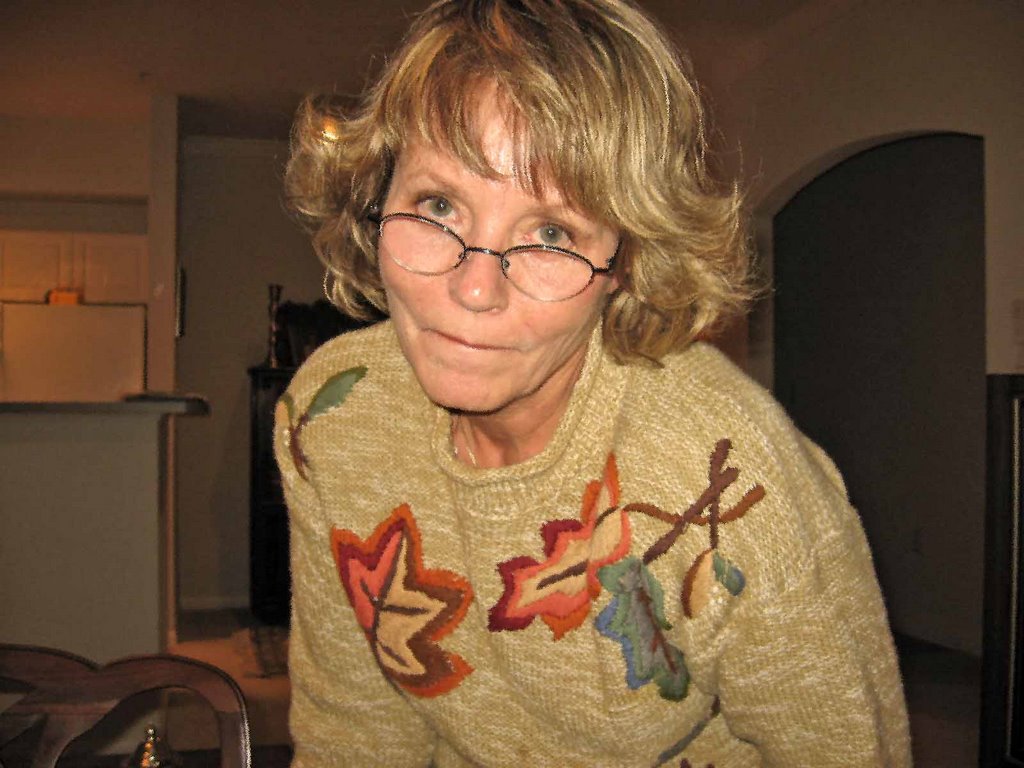
Learn what's it's like to live EQ every day with Susan Dunn, MA, The EQ Coach, www.susandunn.cc. To subscribe to one of our ezines, go here: http://www.susandunn.cc/subscribe.htm .
For individual coaching, call 817-734-1471.
Susan Dunn the EQ Coach talks about Otello (Othello) the story of emotional intelligence gone bad
Is one of your New Year's resolutions to improve your emotional intelligence? If so, please let me help you. Email me at sdunn@susandunn.cc to learn about the numerous products, services, programs and tools I offer, along with personal coaching.
here is Niun Mi Tema, Verdi, from the opera Otello
Haven't you wondered why some people have more success than others? In our personal quests to reach our potential and maximize our personal power and assets, we ponder what the mix is that makes for success in life - work and relationships both.
For many decades (perhaps since the Age of Reason), the Western World focused on cognitive intelligence, generally referred to as IQ. We assumed a high IQ was the ticket.
However, you may have noticed, as early researchers in the field did, that IQ is not the only answer, and sometimes not the most important part of the equation. Even an IQ-genius like Einstein states that there is something more going on - that his theories were leaps of intuition. Daniel Goleman is often misquoted as saying that EQ matters more than IQ, when what he actually said was "it CAN matter more." Haven't you found this to be true?
EQ draws on the continuing phenomenal new research on the human (triune) brain and what emotions are and how they operate -- neuro-affective science. Lust, for instance, comes from the reptilian brain (the oldest, and therefore the strongest), and for good living, we mediate this with the limbic brain (it would hurt my wife if I had an affair) and the neocortex (I could lose all my money in a divorce if I have an affair).
As we fumble around for definitions, please keep in mind, intuitively if you will, that EQ is one of those things that you know when you see it. Think for a moment now of someone you know who is successful (hopefully it is you), and toss around in your mind some of the things that make this person's life work. IQ, perhaps, and also perhaps flexibility, intentionality, ability to assess gut-feelings, ability to work with others, self-management. We even use words like "character," "patience," "maturity," "affability," "leadership," etc.
An operating definition of emotional intelligence is (wikipedia): "an ability, capacity, or skill to perceive, assess and manage the emotions of one's self, of others, and of groups." The definition is evolving, but keep in mind that you know it when you see it. For instance, I prefer to use the term "competencies."
Emotional Intelligence probably began with no less than Darwin, who pointed out the importance of emotional expression for survival and adaptation. Slowly research turned to the non-cognitive aspects of "intelligence". As early as 1920. E. L. Thorndike at Columbia University coined the term "social intelligence" to refer to the ability to understand and manage other people.
Among early researchers in the field, Howard Gardner (Frames of Mind: The Theory of Multiple Intelligences) used the terms "interpersonal intelligence" (to describe our ability to understand the intentions, motivations and desires of other people), and "intrapersonal intelligence" (the ability to understand oneself, to appreciate your feelings, fears and motivations). In 1985, Wayne Payne published a doctoral thesis entitled A study of emotion: Developing emotional intelligence. Salovey and Mayer were also key researchers in the field (1990). It is perhaps Daniel Goleman who popularized the term in 1995 with his best-seller, Emotional Intelligence: Why It Can Matter More Than IQ.
Salovey and Mayer have a good working definition of emotional intelligence: "The ability to perceive emotion, integrate emotion to facilitate thought, understand emotions, and to regulate emotions to promote personal growth". Four categories that make sense are: (1) perceiving emotions, (2) using emotions, (3)understanding emotions; and (4) managing emotions.
A movie that illustrates concepts of emotional intelligence is Orson Welles' powerful "The Tragedy of Othello: The Moor of Venice." In this case, it is an example of emotional intelligence gone bad. This is, of course, Shakespeare's tragedy, Othello, and from this came Verdi's magnificent opera, "Otello" which we also consider. The place of music in emotional intelligence can hardly be underestimated, BTW, and of the great arts in general. See VIVO PER LEI.
In the beginning of the story of Otello, we see a man at the height of his power. [Bear in mind that the definition of a Shakespearean tragedy is that the hero is undone by "a character flaw" not by some external event (such as war or illness)]. Otello was a general, at the top of his game, with a successful career, and a loving marriage to the beautiful Desdemona.
At the end of the movie (play, opera) we see a man who has destroyed his life, killed his wife, and proceeds to kill himself. The aria Niun mi Tema is one of the most powerful arias in opera. It means "No one need fear me any more," and is the lament of a man who was undone by emotions.
What happened? Otello failed to promote a man (Iago) who then set about to do him in, and he did it without laying a hand on Otello. Iago understood Otello better than Otello understood himself, and he used this to bring about Otello's death and destruction at his own hands, manipulating him around like a puppet on a string. See my video on youtube here: http://www.youtube.com/watch?v=xgQOdtW1CI0.
Why study emotional intelligence? To paraphrase Sun Tzu, who was talking about warfare, understanding how people can be manipulated through emotions is as useful for those who wish to avoid having it done to them, as it is for those who wish to practice it.
If you stop and think about it, you can get in touch with times when your emotions either facilitated or blocked your ability to function well, make good decisions and/or use good judgment. Emotions, after all, give us information - it's what we do about the information that makes the difference. Maybe you drove away a lover by something you said in anger, or jumped in (or out of) the stock market on an emotional whim, or gave a poor speech because of anxiety, gave in to lust and ruined your marriage, or got angry and told off your boss and got fired, or talked back to a judge and ... See my video, "The Top 10 Things You Say After You've Been Hijacked (by the reptilian brain)" here: http://www.youtube.com/watch?v=QmMSKLJo2Oc .
There are several assessment of emotional intelligence which vary in their terminology, but some of the competencies are resilience, flexibility, personal power, nonverbal communication, emotional expression, intentionality, authenticity, and empathy or compassion.
Should it be "empathy" or "compassion"? How DO you define emotional intelligence? These are largely academic matters. YOU know the quality that we struggle to define with "compassion" or "empathy" and YOU KNOW know that it - and the other competencies - matter. And the most important thing is that unlike IQ, EQ can be learned. I know. I teach it.
What's another good definition? Many of my clients have called emotional intelligence "the missing piece." And then there was one who said, "your course saved my mind."
Susan Dunn, www.susandunn.cc, sdunn@susandunn.cc . Susan coaches individuals and trains and certifies coaches internationally. She is the author of numerous ebooks (http://www.webstrategies.cc/ebooklibrary.html)and has been chosen Adult Dev. expert for the largest self help portal on the Internet.
From the helium.com blog ... in response to how to write, we get a good deal of Emotional Intelligence tips.
Writes Sam:
I've been reading a biography of Audrey Hepburn. And one thing she said struck me as very true. She said that in portraying Anne Frank on stage, "I act the same way now as I did forty years ago...with feeling instead of technique. All my life I've been in situations where I've had no technique, but if you FEEL enough you can get away with murder."
There are so many books that teach story telling technique, but what about heart, what about emotion? Where do you find it?
Well you find it by looking inside. Knowing people is knowing emotions. The cornerstone of Emotional Intelligence is self-awareness. Without it, there can be no Emotional Intelligence.
Sam answers his own question:
One answer is contained in my second paragraph ... I firmly believe that screenwriters should try to learn as much about people (and themselves) as possible. Through biographies (not the the cheesy, tabloid kind) you can learn about the motivations of people who lived exceptional lives. You can learn about the experiences and forces that shaped them and their decisions.
Yes, definitely not the cheesy, tabloid kind. Great literature. Read the hard stuff.
Start with Shakespeare. Try "Othello" and then see Verdi's opera, "Otello." It is the study of a man who cannot control his anger and jealousy. He is therefore easy prey. He trusts whom he shouldn't, and he doesn't trust whom he should. He flips out and doesn't check things out rationally, with his neocortex.
His enemy Iago wants him dead, and all he has to do is wind Othello up, push the button and watch him self-destruct. It's so easy. Otello is so predictable. It is so tragic. The ultimate in self-sabotage. Want to find the heart, the emotion? Listen to Mario Lanza sing Otello's final aria, Niun Mi Tema ... which he sings to his wife, whom he has just killed (it ends with un bacio, un bacio ancora ... un altra bacio ... (a kiss, another kiss, a last kiss), just before he plunges a knife into his own heart. (Verdi at his best!) If you cannot access this video, go here: http://www.youtube.com/v/M4sfXc5a5Y4 .
Freud said what he knew about human nature, he got from Shakespeare. So it might be a good start, and also a place where you never finish! _________________________
Shop with me safely online at MyArbonne for safe, pure supplements, cosmetics, products for men, baby products, lotions, and more. Great for gifts.
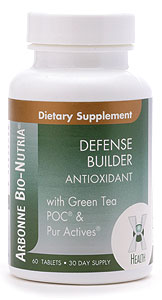
Order some DefenseBuilder for yourself, and get your immune system in shape for the stress of the holidays, and winter. It's the cold and flu season, but not for you!
Did you read the report that showed that the average office telephone has more germs on it than the average office bathroom toilet seat? (ug)
Training and certifying coaches internationally. Now accepting a limited number of new coaching clients - personal life coaching, dating coaching, transitions, parenting, most areas.