Showing posts with label work. Show all posts

Friday, May 09, 2008

EQ- and the Job Interview


LET ME GUIDE YOU THROUGH THE FOG
Interviewing for jobs? Looking for a new job? Just moved to a new location?
Of course you know to prepare. Yes, be able to answer "What's a problem that happened on the job and what how did you handle it?" and "Tell me about yourself."

We all know those pretty well by now!

But considering that most people form their impression of you in the first 30 SECONDS, there's another little bit of homework you need to do.

Especially if you're new to an area ... and you can really consider any new job environment a "new area."

One of the most important areas you could research is to find out how the people dress.

FROM TODAY'S MAILBAG:


Susan, I just moved to the Dallas Fort Worth area. I didn't know
there was a rivalry between the two. I started out working at a firm in
Dallas, but the commute (4 hours a day) was too long. So I tried Fort
Worth. When I walked in for my interview, dressed like I did in Dallas, the woman said, "We don't dress like that here." It seems in Fort Worth you wear some color, and in Dallas, black is fine.

Later I had a temp job. The receptionist told me they liked most
temps, but they did get rid of one. "We just couldn't stand the way she
dressed."

The next interview in Fort Worth I thought I'd done better but it turned out long hair is also "out". The man interviewing me looked at me, then turned to the other woman in the room, who had that shaved hair cut, and said, "I like your hair." That was a slam.

What do I do???? I need a job and I'm stuck between these two cities.

Do your research in this area. It's best to "fit in" as well as you can. Look up the place on the Internet and check out the dress code. Talk to people you know who might know. Go for the middle of the road, neutral look.

You might even go so far as to keep some things in your purse - a set of plain pearl earrings and then gold loops. You will usually have some time between your entrance and the time you meet with the interviewer to get the lay of the land. Like when you sit in the receptionist area. Use this time wisely, to look around and see how things are. Adjust accordingly.

For coaching, call me at 817-741-7223. I'm here to help.
Also ask for me ebook, "Acing the NEW Job Interview." Email me to order.

Add to My Yahoo!

Monday, February 25, 2008

How is your cultural EQ?

Low cultural IQ could hijack your career

A new quiz may determine whether you will shine on the global stage or cause an international incident

From the article"


You get anxious in unfamiliar situations. You can't stand not knowing what is coming next. You hate it when people keep you waiting.

You may have a career-threatening cultural IQ.

In addition to other indicators of ability, such as social intelligence and emotional intelligence, employers are now paying more attention to the cultural intelligence of their staff, as workplaces become increasingly diverse and companies conduct more business abroad. Yet most people don't know how they measure up.

To learn more about EQ - cultural, spiritual, mental and emotional, take THE EQ COURSE. Email me for information at sdunn@susandunn.cc .


Add to My Yahoo!

Monday, June 25, 2007

Business Communication doesn't have to be Jargon


Please, please go visit this blogsite. The graphics are so good, all you have to do is look at them and you've got the message.
NO JARGON
If you've worked with me, taken one of my Internet courses, or read one of my ebooks, you know that I hate "jargon" and don't use it. The courses and ebooks are all post-grad level, but they are in plain English.
When I was in grad school and getting a little heady about how smart I was about to be, I wrote a paper full of obfuscations and the professor told me he agreed with Einstein -- if you can't explain it to your grandmother*, you don't know what you're talking about. He said never to be afraid to say it in clearly, with short words.
In fact that's a really good idea in tense situations, like where you're the expert, boss or authority figure. Consider a doctor delivering bad news, for instance. There's a great email going around about friendship, where one of the items is "And when you're upset, I'll speak to you in short words."
(That's an anachronism, of course, grandmother. How about - if you can't explain it to a 10 year old ... )

Now if you were standing in the office instead of at the ironing board, and someone started talking at you that way, wouldn't you RUN?
These graphics are reproduced under the creative commons agreements.
Isn't that marvelous?

This blogster is a real genius, the kind with IQ AND EQ.

To improve your communication, take THE EQ COURSE. It reinforces some of the other points made on this blog -- that PowerPoint doesn't teach, people teach ... that throwing money at a problem doesn't solve it ... that the more you micromanage, the more you make dysfunctional idiots out of your employees, that two heads aren't always better than one ... and don't start your presentation, book, talk "at the beginning".
It's just a great site. Take some time and browse it.

My life's work is helping people get along better, get more done, have more success in relationships and at work, and enjoy their life more. This takes high emotional intelligence, understanding how you operate and also how the other person does.

Thursday, June 21, 2007

Business Emotional Intelligence

Add to My Yahoo!

BUSINESS EMOTIONAL INTELLIGENCE

Makes some good points.

Be the kind of person people want to be around.
Get along with IT and the other people who can help you do your job.
If you want to impress, come in early, don't stay late. The perception of the ones who come early is always good. The perception of those who stay late is not always good.

Interesting, take a look and let me know what you think.


For a broader look at what he's talking about, take THE EQ COURSE or get career EQ coaching. Email me at sdunn@susandunn.cc . I work with people all over the world - distance is not a problem. User-friendly.

Monday, April 16, 2007

Examining the alpha male at work


Examining the alpha male at work - CNN.com

As an early-adopter of EMOTIONAL INTELLIGENCE (EQ) I was thrilled to see this article. I, too, have studied the alpha male - - from the vantage point of EQ v. IQ.

Each of the 4 types of alpha males (commander, visionary, strategist, and executor) has its downside, says this article on cnn.com's CareerBuilder, and, most interestingly, the climate is changing -- the alpha males may go the way of the dinosaurs as the influence of more women in the workforce has brought in emotional intelligence and affilitiave, collaborative behavior. Or is it the influence of more EMOTIONAL INTELLIGENCE in the workplace.

The great divide began when we had to leave Freud and Freudian psychology behind ... the drives - - sex and aggression - - well there's a lot more driving people today, like wanting to enjoy life, find meaning in their work, balance in their lives, and room for the emotional factor. Most important decisions must be made by other than strictly rational, logical means, after all. If you could choose the best stock rationally, all us investors would be millionaires - there are charts, after all. And if you could choose the best candidate for a job by their resume alone, it wouldn't be the miasma that it is, would it? No, it takes intuition, gut feeling, creativity, flexibility, and a host of other EMOTIONAL INTELLIGENCE competencies.

EQ (Emotional Intelligence) is now looked for as well as IQ in management, leadership and the workplace. In fact it's slowly being demanded in the workplace. If the average job in the US now is 18 months, one of the reasons people leave is because of abusive management. We cannot do our best work in an atmosphere of nit-picking, or where we're ignored, or devalued in comparison to data, for instance. And your EQ will tell you that most of us truly want to succeed, grow, learn, help others in the workplace to do the same, and to be appreciated. Not all the time, but just enough.

Take for instance the alpha male called The Executor. Probably my least favorite to work for because (to me) the Visionary is inspiring; strategists' minds are so fascinating and in my world they generally find a way to avoid much contact with people; and commanders are energizing. I worked for all of these types in my day (and that's why I'm not self-employed!)

Executors, however, are micro-managers who cramp your style, eschew anything creative or "outside the box," and never give priase, but rather pick, pick and pick, and most importantly, must assign blame. I've seen then stop the whole parade for as long as an hour or more, to get out their miocroscope and investigate a rather inconsequential incident. When I'm around one, I always want to shout, "Stop! Just fix it! Let your people free!"

So many things in the workplace today, particularly because it IS more collaborative, are a failing of systems or equipment, or simple one-time human error -- not something that can be fixed. And it takes a real micro-manager to stop the flow of a project, particularly under pressure of a deadline, to fly-speck and see "whose fault it was."

How much better to say to the human who failed at that one point, "That's not like you!" than to harp on the mistake. Someone who continually fails, sure, and particularly one who intentionally sabotages, but the average person having a bad moment or day ... well, it's NOT LIKE THEM, so move forward. Guilt, blame, tempers and anger accomplish th exact opposite of anyone's intent. And lets hope those few people, among them managers, who enjoy making other people miserable, are really on their last legs in the workplace.

Okay. Now I'm off my soap box. But I'm an emotional intelligence coach after all, and I KNOW that EQ matters more in managing people than IQ does. Perhaps the time has come to let the sheer intellect types work in isolation (which they generally prefer), and keep them away from management, which annoys both sides of the equation.

There should be ladders of promotion on two tracks - the people side, and the OTHER side.

The most heartening thing about the article is that emotional intellingence has become so well-known and valued.

We were an early-adopter and have helped so many people improve their lives, and the lives of those around them through emotional intelligence. It is truly the "common language," as I have trained and worked with people around the globe, who immediately catch on to the power of emotional intelligence.

Emotional intelligence is empowering. Get involved! See me for coaching, or to take the EQ course. Email me at sdunn@susandunn.cc

Thursday, April 05, 2007

Learn How to Make Your Workplace Happier and More Productive


Learn about the 7 Key Steps to Make Your Workplace Happier and More Productive

THE MAJOR KEY IS WELLNESS ... being in top shape physically, mentally, emotionally and spiritually. Emotions effect our wellness - as Candace Pert, Ph.D. says, our emotions are in every cell of our body. Try ARBONNE for feeling your best. You cannot follow any of the 7 steps unless you are robust, energetic and healthy. Shop safely online with me at MyArbonne. I use only their products, cosmetics, supplements, lotions (they are PURE) and I haven't missed a day of work (or fun) in 4 years. Have you? What you put on your skin is absorbed into your bloodstream.
________________________________________________________
What's the key to a great workplace?

Emotional Intelligence ... according to Dr. Steven Stein, who studies emotional intelligence, or EQ, these are the 7 keys from his new book:

THE 7 KEYS (Go HERE to read the whole article.)

1. Hire capable people who love the work they do and show how they contribute to the bigger picture.

2. Compensate people fairly.

3. Don't overwork (or under work) people.

4. Build strong teams with shared purpose and viable goals.

5. Make sure managers can manage.

6. Treat people with respect and leverage their unique talents.

7. Be proactively responsible by doing the right things to win the hearts and minds of your people.

All of these are signs that the workplace has a high EQ or emotional intelligence. "Happy" people ar emore productive, and one thing we learn from studying emotional intelligence, which I like to combine with the StrengthsFinder assessment (because it is NOT all about "emotions") is that what makes one person "happy" in the workplace, does not make another person "happy."

Look around in an average office these days and you will find all ages, cultures, backgrounds, etc. I was observing one alpha male today. The office is under a huge crunch, and many are wearing down. This man absolutely LOVES to work and "churn it out." He gets HAPPIER as the pressure builds, more cheerful as the day progresses, and I find hi absolutely energizing. Why? Because emotions are contagious. There's nothing like a leader who can smile when the going gets rough, and can show what I call "grace under pressure."

Want to know more about it? Take the EQ course.

It's all about GRACE UNDER PRESSURE.

Wednesday, November 22, 2006

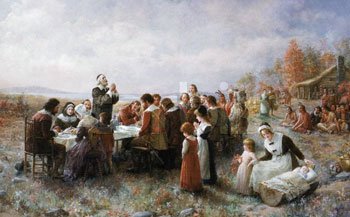
Who Are You Grateful To This Thanksgiving?

URL: http://www.susandunn.cc/
Mailto:sdunn@susandunn.cc

WHO ARE YOU GRATEFUL TO?
Acknowledging the Team

This article is for you if you’re a behind-the-scenes kind of person: the administrative assistant who gets the presentation ready for the guys in marketing but doesn’t get to go to the meeting; the PR pro who writes all the CEO’s speeches and answers all the complain letters; the at-home mother who makes sure the concert pianist practices; the deputy chief whose job description is doing all the things the chief doesn’t like to do or can’t do; or the paralegal who prepares all the pleadings, knows all the codes, and does all the licking and stamping.

This article is also for you if benefit from the work of one of those people.

Temistocle Solear, Antonio Ghislanzoni, Henri Meilhac, Jules Barbier, Michael Carre, Giuseppe Giacosa, Luigi Illica, Renato Semoni, and Nicola Haym all know what this is like.
Who on earth are these people?

Well, even if you’re not an opera fan, I bet you’ve heard of the composers Verdi, Bizet, Mozart, Strauss, Gounod, Handel, Donizetti and Puccini. And I’m sure you’ve heard of some of their operas: Aida, Carmen, Cosi fan Tutte, Madama Butterfly, Faust and Don Giovanni, for instance.

Did you know that these composers wrote the music for their operas, but not the lyrics? Solear, Ghislanzoni and the other individuals in the list are what’s called “librettists.” It is they who wrote the words (the libretto) the opera singers sing, without which you would be listening to a symphony, not an opera. And we never hear their names! In most cases, the words were written first, and then the composers whose names we know so well, wrote the music.

Like Gilbert and Sullivan, they worked together in pairs. The inimitable Richard Wagner was the only one to compose all his own operas entirely by himself, creating both music and lyrics, which may account for why they are so powerful, so Wagnerian. This is quite a feat because composing music and writing words require different parts of the brain.

Sometimes the composer and librettist met in person, while other times they worked via correspondence. Strauss worked exclusively with one librettist, after writing his own lyrics for his first opera and finding out he wasn’t good at it, but most other composers switched around, finding the right librettist for the job, or one who was available. It’s not unlike the way many of us work these days, long-distance and by contract.

What an incredible collaboration an opera is. It takes costume and set designers as well, because an opera is as much visual as it is auditory, and it is what makes Grand Opera, grand. In the Santa Fe opera’s production of “Turnadot,” when the moon appeared, she iwas personified and costumed in a magnificence that seemed to dominate the stage for half an hour. Another opera I hope to see one day is Verdi’s “Aida,” I mean Verdi and Ghislanzoni’s “Aida,” on stage at the Bath of Caracalla in Rome. The Triumphal March of Rhadames features live elephants and horses on stage. Now that’s entertainment!

What we don’t see at an opera is the orchestra, a crucial element. They’re listed in the program, of course, and given their bows at the curtain call, but we only hear them, seated below in the orchestra pit.

Many elements go together to produce the opera as see that bears the name of one man only.
Take “Turnadot” for instance. It was librettist Semoni who gave Puccini the suggestion for the opera in the first place, telling him about Turandotte, a play written by Gozzi, based on a fable from the Arabian Nights.

Puccini had been searching for two years for a suitable plot for an opera, and at the age of 61, began “Turandot,” instructing his librettists, Adami and Semoni, to “pour great pathos into the drama.” Puccini, of course, is know for the most beautiful melodies in opera. He was also know for being extremely demanding, requiring endless rewrites from his librettists.

From his point of view, however, the librettists were difficult. We can read his letters begging them to do their work. Semoni was in charge of Act III, and Puccini’s letters beg, “The third! The third! The third!”

At one point, he confessed to a friend “Music disgusts me,” as he evidently had periods of self-doubt and composer’s block. Toscanini paid him a visit and gave him the encouragement to keep going. Every team has their Toscanini; or should.

Puccini was justified in urging completion of the opera as he died before the completion of the third act. The collaboration continued, as Toscanini found a composer named Franco Alfano, whose name is rarely mentioned, to complete it. The world premier took place on April 25th, 1926, the work of one guiding genius and many hands, hearts, and minds.

It isn’t that teamwork and collaboration is new, it’s that it’s newly being recognized. Most of us realize we couldn’t accomplish anything alone, while those behind the scenes who work long and willing hours, long for some recognition. “Appreciation,” after all, top the list when employees talk about what they want at their job. It’s number one so consistently, it’s a wonder it isn’t heeded more.

Richard Montuori, town manager of Bellica, Massachusetts, knows and appreciates his team. I love [my] job, he said in a newspaper interview. “Every day is different and presents new challenges. Finances are a daily and yearly challenge, but no one person ever accomplishes anything alone. We have excellent department heads and town boards that help keep the town moving in the right direction.”

Isn’t it nice to hear someone publicly acclaim the team that makes them shine? I hope your boss or manager does this for you, and that if you’re the boss or manager, you appreciate and acknowledge and sing the unsung heroes in your midst.

But how do you praise everyone? There are always so many.

Here’s a leadership trick I learned from a pro. At the culmination of a fundraising banquet engineered by many, and funded by many more, the director of the benefited-agency rose and thanked everyone who helped make it possible. Then he added, looking around the room, “and I’d especially like to thank someone – you know who you are – who made this happen.”
I thought it was me! So did many other people, I’m sure, and that was what the director had in mind, he told me later when I asked him whom he had in mind, because his glance around the room was professionally ambivalent.

It works. And it’s always, always true.

Susan Dunn, MA, The EQ Coach, http://www.susandunn.cc/. Providing coaching, Internet courses and ebooks around emotional intelligence for your personal and professional success. I train and certify EQ coaches internationally. Email for info on this fast, affordable, comprehensive, no-residency program. Mailto:sdunn@susandunn.cc for free EQ ezine.

ORDER YOUR DEFENSE BUILDER NOW. Get your immune system built up for the holidays. Shop safely online with me at MyArbonne. To your health!

Sunday, November 19, 2006

Things Not to Do Your First Week at a New Job


11 THINGS NOT TO DO YOUR FIRST WEEK IN THE NEW JOB

Check out my article which is posted on this great job blogsite: http://jobs002.blogspot.com/2006/11/11-things-not-to-do-first-week-on-your.html .
The hardest thing to do is break into groups that are already formed. If you haven't been to a kindergarten classroom lately, go take a look at you'll see this principle in action. A group of kids is playing together and New Child tries to "break in" or get included. There's a real art to it. Some kids have it and some don't. This is Emotional Intelligence at work, and of course you can learn HOW to do it. If someone will just tell you! It's very overt in the kindergarten classroom and it happens often and rapidly, so it's easy to observe. Breaking into a high school clique is harder to observe and more subtle. It's also far more brutal. And then there's the new job and/or new neighborhood or town. It just doesn't get any easier. While learning Emotional Intelligence and the ploys that tend to work doesn't always guarantee success, there are thing you can do that will essentially guarantee you will fail. Read this article for tips on what not to do the first few weeks on a new job.
______________________
The frost is on the pumpkin! Are you taking a supplement to build up your immune system for the winter. Arbonne has a great one called DefenseBuilder Why don't you take a look at it? You can shop safely online with me at MyArbonne.
For EQ coaching, call 817-741-7223.